







Gaming Chair vs Office Chair: Are Gaming Chairs Worth It?
Gaming chair vs. office chair is a debate that comes up often among people who spend long hours at a desk. Some prefer gaming chairs for their cushioning, high backrests, and reclining comfort, while others believe office chairs suit work, posture, and extended sitting better. The choice becomes even harder when your desk serves multiple purposes, from working and studying to gaming and watching content.
So, are gaming chairs really less suitable for everyday use, or is the difference between the two types smaller than it seems? In this guide, we'll compare gaming and office chairs, address common concerns, and explain what to look for when choosing one for work and play.

- 1. Gaming Chair vs. Office Chair: What's the Difference?
- 2. Are Gaming Chairs a Scam? Are They Good for Use?
- 3. What to Look for in a Gaming or Office Chair
- 4. Best Chair Recommendations for Your Work and Play 🔥
- 5. FAQs About Gaming Chairs vs. Office Chairs
- 6. Summary: Gaming Chair & Office Chair, Which is Better?
Gaming Chair vs. Office Chair: What's the Difference?
At first glance, gaming chairs and office chairs may seem fairly similar, as they both can be height-adjustable, padded, and built for long periods at a desk. The main differences often come from how they are designed to support your body and how you are expected to use them. Gaming chairs commonly feature high backrests, contoured seats, head and lumbar support, and deeper reclining, while office chairs tend to focus more on an open seating design, adjustable support, and easy movement during desk work.
That does not mean every gaming chair has the same limitations or every office chair is automatically more ergonomic. Designs vary considerably within both categories, and features such as lumbar support, armrest adjustment, seat fit, recline, and materials can affect comfort more than whether a chair is labeled "gaming" or "office."
Here's how the two typically compare:
| Feature | Gaming Chair | Office Chair |
|---|---|---|
| Design | Often high-back with a contoured, racing-inspired shape | Usually more open and understated |
| Seat | Commonly padded and more enveloping | Often flatter or more open to allow movement |
| Lumbar Support | Can range from removable pillows to integrated or adjustable systems | Often integrated and adjustable on ergonomic models |
| Armrests | Varies from basic fixed or 1D arms to highly adjustable designs | Often offers multiple adjustment options |
| Recline | Typically allows a deeper recline for gaming and relaxation | Usually designed around upright or task-focused reclining |
| Materials | PU leather, fabric, mesh, and other materials depending on the model | Mesh, fabric, leather, and other materials |
| Appearance | Often bold, sporty, or gaming-focused | Generally minimalist and professional |
| Common Use | Gaming, streaming, watching content, and mixed work/play | Office work, studying, and other desk-based tasks |
In practice, the difference often comes down to what you do at your desk most often. Someone who mainly works or studies may prefer an office chair that supports an upright, task-focused position and prioritizes adjustability or breathability. Someone who games, works, and relaxes in the same setup may appreciate the high-back support, cushioning, and reclining range of a gaming chair.
Are Gaming Chairs a Scam? Are They Good for Use?
Gaming chairs have long been criticized for being more about looks than ergonomics. Traditional racing-style designs often feature upright backrests, bucket-style seats, and separate lumbar or head pillows, which can limit movement or provide less tailored support during long periods of sitting. This is why some people still assume that gaming chairs are only suitable for gaming and are a poor choice for office work.
That criticism was more understandable with earlier gaming chair designs, but the category has evolved. Modern gaming chairs can incorporate ergonomic features such as adjustable lumbar support, multi-directional armrests, adjustable seat height, and reclining mechanisms designed to support different sitting positions. Rather than simply offering a racing-inspired look, these features let a gaming chair adapt more easily to how you work, game, or relax.
So, are gaming chairs a scam? Not necessarily. As with office chairs, what matters most is the chair's actual design, adjustability, and fit, but not simply whether it is labeled as a gaming or office chair. For people who use the same setup for both work and play, a well-designed gaming chair can provide the support and flexibility needed for everyday use.
What to Look for in a Gaming or Office Chair
Whether you choose a gaming chair or an office chair, the most important factors are the ones that determine how well it supports your body throughout the day. Rather than focusing only on the chair's appearance or category, pay attention to these practical features.
- Lumbar support: Look for support that fits the curve of your lower back and, ideally, can be adjusted to your preferred position.
- Adjustable armrests: Armrests that move in multiple directions can better support your arms and shoulders when typing, gaming, or reclining.
- Seat fit: Check the seat height and depth to make sure your feet can rest comfortably on the floor without putting unnecessary pressure behind your knees.
- Recline and tilt: A suitable recline range gives you more flexibility to switch between focused work, gaming, and relaxed positions.
- Materials and breathability: Consider whether the upholstery and backrest material will remain comfortable during long sessions, especially in warmer environments.
- Size and weight capacity: Choose a chair that matches your height, body shape, and weight range for more stable and supportive seating.
These features can make a noticeable difference in everyday comfort, whether the chair is designed for gaming, office work, or both. For a mixed work-and-play setup, it is especially useful to look for a chair that combines ergonomic support with enough adjustability to accommodate different ways of sitting.
Best Chair Recommendations for Your Work and Play
Looking for a chair that can handle both work and gaming? The right choice may come down to the features you value most. For example, you might prefer the fuller support and deeper recline of a gaming chair, or the airflow and flexible seating of an ergonomic mesh chair. Here are two options worth considering.
AndaSeat Kaiser 4 Series - Best Gaming Chair for Your Play
Want a gaming chair that can keep up with both intense sessions and everyday desk work? The AndaSeat Kaiser 4 combines 4-way pop-out lumbar support, 6D armrests, and a 90°–135° recline to give you the support and freedom to shift from focused play to laid-back comfort. Available in different sizes and upholstery options, it is built to adapt to more than one way of sitting.

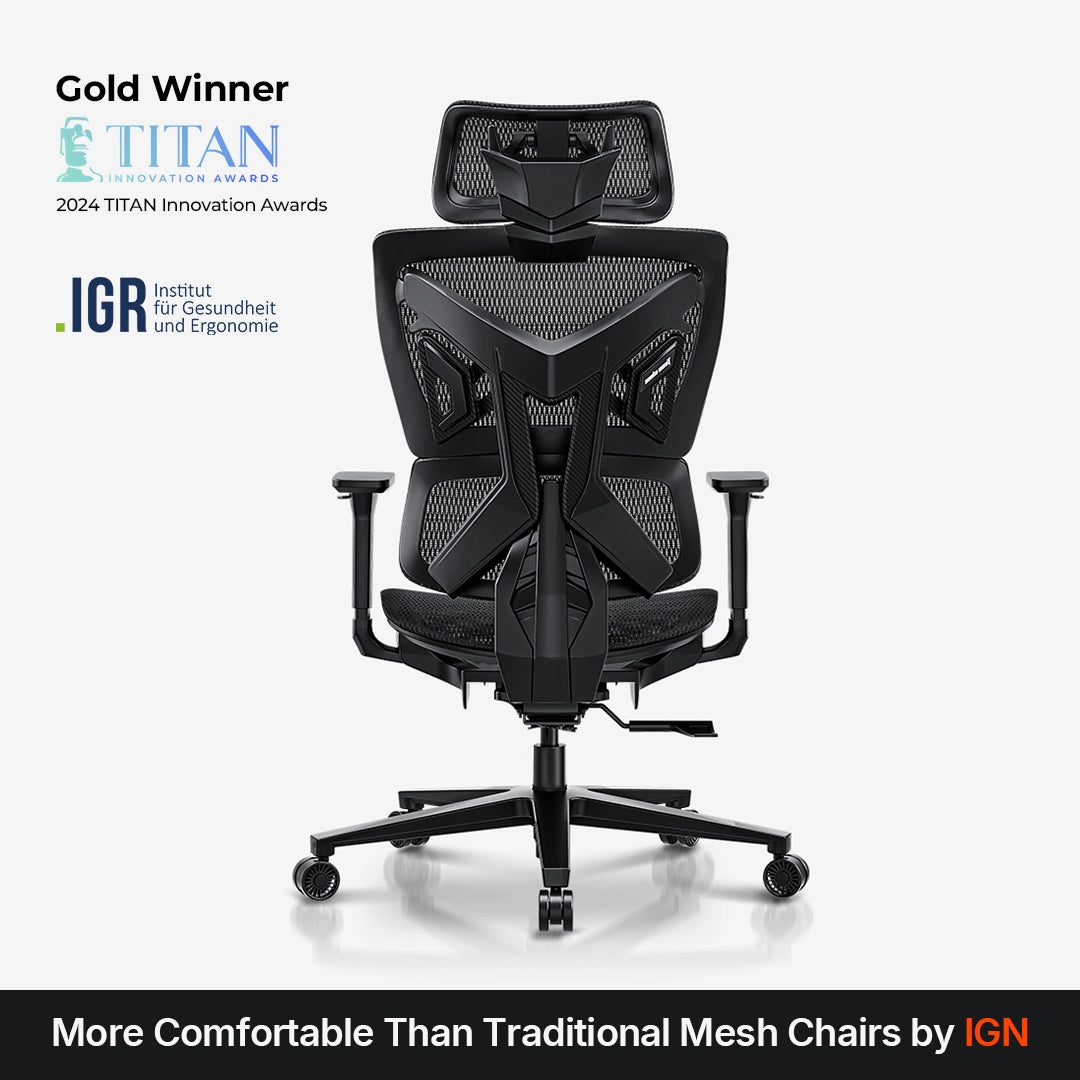
AndaSeat X-Air Series - Best Office Chair for Your Work
Prefer a cooler, more open seating experience for long hours at your desk? The AndaSeat X-Air uses an all-mesh design with dynamic lumbar support, adjustable seat depth, 4D/5D armrests, and a self-adaptive recline. It brings the airflow and ergonomic adjustability many people expect from an office chair, while remaining versatile enough for gaming and everyday use.
FAQs About Gaming Chairs vs. Office Chairs
What is the difference between an office chair and a gaming chair?
Gaming chairs typically feature high-back designs, contoured seats, more pronounced reclining, and gaming-focused aesthetics, while office chairs often emphasize task-focused ergonomics, adjustability, and breathability. However, the differences are not absolute, as modern chairs in both categories can offer advanced ergonomic features.
Are office chairs better than gaming chairs?
Neither is universally better. An office chair may suit you better if you prioritize task-focused ergonomics, breathability, or a more traditional office design, while a gaming chair can be a good fit for users who want a combination of work, gaming, cushioning, and reclining comfort.
Can gaming chairs help with back pain?
A gaming chair may provide useful support when it offers features such as adjustable lumbar support, a properly fitted seat, and appropriate armrest and backrest adjustments. However, no chair is a universal solution for back pain, and proper fit and sitting habits also matter.
Can you use a gaming chair as an office chair?
Yes. A well-designed gaming chair can be used for office work, especially when it provides adequate lumbar support, adjustable armrests, suitable seat dimensions, and a comfortable reclining mechanism. The key is whether the chair fits your body and supports the way you work.
Summary: Gaming Chair & Office Chair, Which is Better?
When comparing a gaming chair vs. an office chair, there is no single answer that works for everyone. Office chairs may be a natural fit for users who prioritize task-focused ergonomics, breathability, and a traditional workplace design, while gaming chairs can offer a more supportive, reclined, and versatile experience for those who divide their time between gaming, work, and relaxation. In either case, factors such as lumbar support, adjustability, seat fit, and materials are more important than the category name alone.
It is also worth looking beyond the stereotype that gaming chairs are simply racing-style seats designed for appearance. Modern gaming chairs, especially AndaSeat's gaming & office chairs, have evolved to include more ergonomic features and greater adjustability, making some of them suitable for extended desk use as well as gaming. Rather than ruling out one type based on its label, take a closer look at the actual design and features to find the chair that best matches your body, workspace, and daily routine.